Monday, February 23, 2026

Cyberoce QR code access control vs peer products: why do overseas system integrators ultimately choose us?


Cyberoce QR code access control vs peer products: why do overseas system integrators ultimately choose us?

Tired of unstable hardware? Cyberoce offers field-proven QR code access control with 12 years of focused expertise. Our platform-first hardware is a pure execution layer, ensuring reliability via modular monitoring and a dual-watchdog design. A unified HTTP/MQTT API across our certified product line enables non-destructive upgrades and unlimited expansion. Partner with us to reduce long-term costs, ensure project stability, and solve the pain points others can't.

Table of contents:

1、The independent operation and real-time monitoring of the core module are the underlying differences between Cyberoce QR code access control and peer products

2、Our company's QR code access control software and hardware collaboration guarantee: dual watchdog to prevent "crash"

3、Full scene compatible design:

4、Unified QR code access control interface:

5、Non destructive upgrade design for QR code access control:


Text:
For system integrators and software platform providers who pursue long-term stability and have development capabilities, choosing QR code access control hardware has never been a simple "function comparison" game. It is a strategic bet on long-term operating costs, system architecture sovereignty, and on-site reliability. Many system integrators have also used other brands of QR code access control products, but due to low compatibility, poor stability, and inadequate after-sales service, they ultimately chose Cyberoce QR code access control.

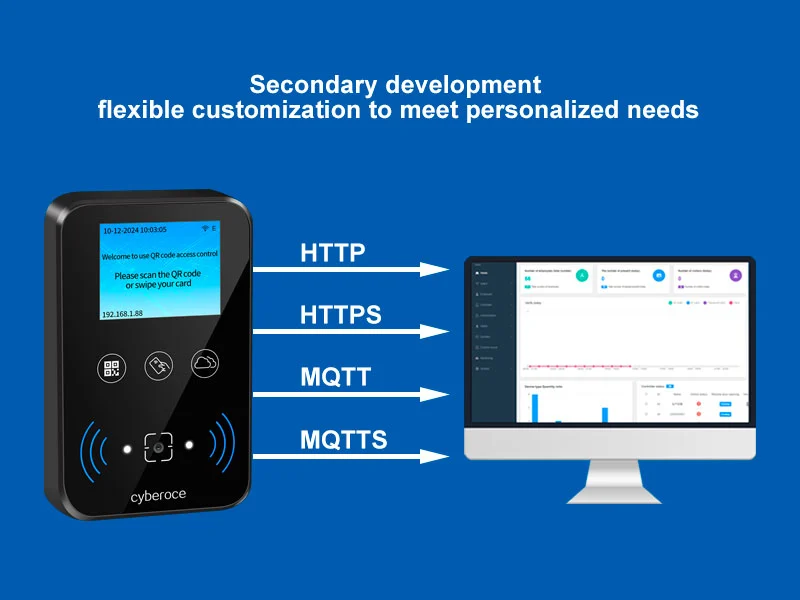
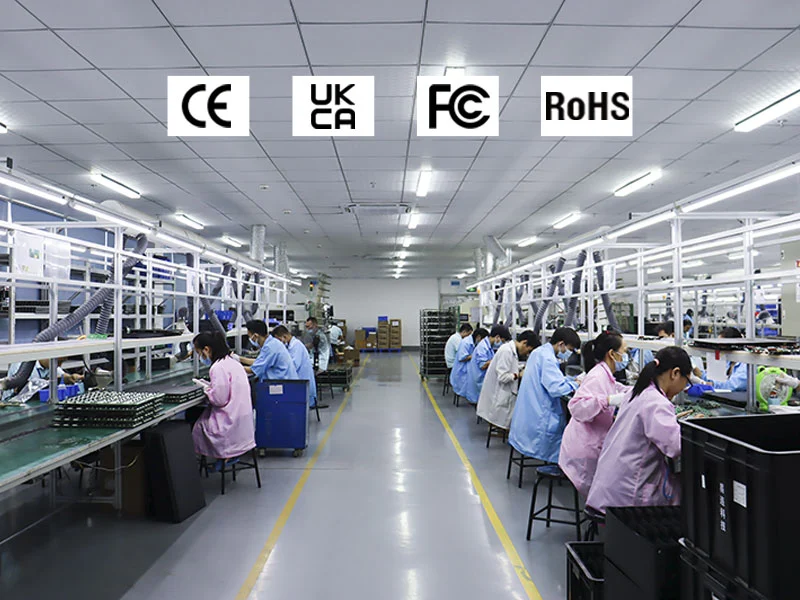
Since its establishment in 2014, Cyberoce has been deeply involved in the field of QR code access control, honing its skills for twelve years. It always adheres to the architecture design of software platform priority and hardware pure execution layer positioning, without participating in any data storage or logical decision-making, making the integrator's platform always the only "brain" and data center. Our company provides a unified HTTP/HTTPS/MQTT secondary development protocol, seamlessly integrating with any system platform. We have obtained a total of 88 prestigious certificates and patents, and our products have passed international certifications such as CE, FCC, and ROHS.

This article delves into the key engineering differences that make Cyberoce QR code access control the most reliable choice. Ensure that our devices not only execute your commands, but also perform with consistent stability.

1、The independent operation and real-time monitoring of the core module are the underlying differences between Cyberoce QR code access control and peer products

When designing QR code access control, Cyberoce did not aim for "functional stacking", but prioritized solving a problem: how can the equipment operate continuously and stably in complex and uncontrollable on-site environments?

Therefore, when designing QR code access control products, the most problematic processes of scanning, swiping cards, and networking should be made into independent modules that operate and monitor independently, rather than simply mixing them together.

*Scanning module: continuously detects the camera status and image decoding process, even in situations of changing lighting or frequent traffic, to maintain reading stability and reduce traffic interruptions caused by recognition abnormalities.

*Card swiping module: The communication process of the chip is fully controlled, and whether the instruction return is normal can be judged in real time to avoid the situation of "no response after swiping".

*Network module: The network status is continuously monitored, and even if there are fluctuations in the on-site network, the device can adjust the connection status in a timely manner to ensure uninterrupted data transmission.

These modules run independently and do not affect each other. When an exception occurs in a certain link, the system will prioritize handling it within this module, rather than directly affecting the overall operation of the machine. This can limit the problem to the minimum range and avoid small faults from spreading into system problems.

2、Our company's QR code access control software and hardware collaboration guarantee: dual watchdog to prevent "crash"
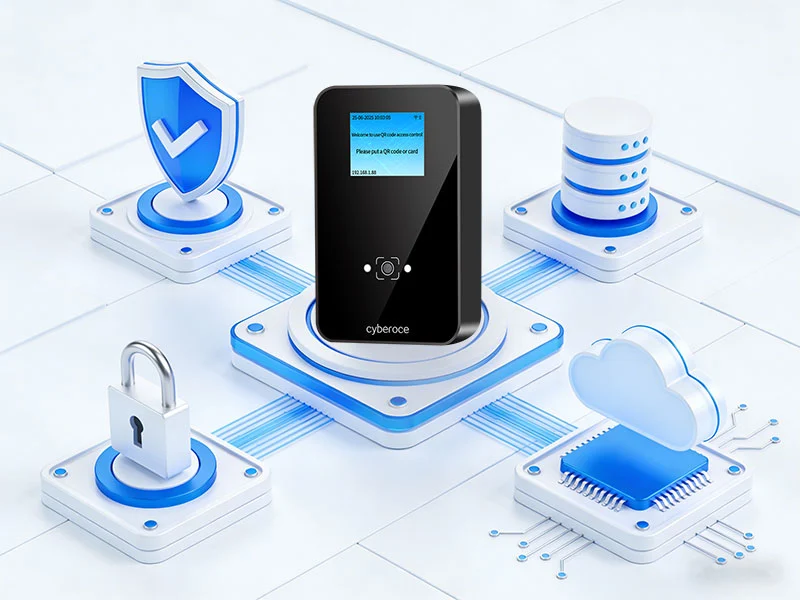
Simultaneous participation of software and hardware - ensuring more stable operation of access control using QR codes. In many project sites, network fluctuations and unstable power are common situations. Without hardware level monitoring, it is easy to encounter device unresponsive situations.

Cyberoce QR code access control usually introduces independent hardware monitoring circuits during software self checking to continuously detect power and system operation status. When encountering an exception, the device can actively handle it instead of constantly stopping in an abnormal state.

The dual watchdog is designed to solve the "most difficult to locate problem". In some extreme situations, the device may enter: unresponsive, not crashing but not working, and cannot be remotely restored. The Cyberoce QR code access control adopts a dual watchdog mechanism:

*Built in watchdog: The main control chip monitors whether the software is running normally

*External reset chip: Independently monitors the overall status of the machine and triggers a reset upon detecting any abnormalities

This approach is not intended to increase complexity, but to avoid the equipment being unable to recover for a long time in an abnormal state, which may affect normal on-site use.

3、Full scene compatible design:

*Wide voltage input+surge protection: supports DC 5-25V voltage

*Dynamic fill light technology: 0-80000 lux (non direct sunlight) light source, adaptive adjustment

*IPX7 protection design: suitable for outdoor use

*Extreme temperature test: wide temperature operation from -20 ℃ to 70 ℃

4、Unified QR code access control interface:

We provide a unified HTTP/HTTPS+MQTT interface that is forward compatible with all older versions. Our entire hardware series, including QR code access control all-in-one machines, facial access control machines, and layered elevator control motherboards, share the same interface logic. This means that the integrator's software platform can adapt to the hardware layout of all scenarios such as community gates, unit doors, turnstiles, elevators, etc. The software side does not need to adjust the architecture, only needs to add parameters to achieve functions such as elevator control linkage and package management, truly achieving "one-time docking, unlimited expansion". This is an architectural advantage that competitors in the same industry cannot match, and it is also the core capability that Cerberus has been polishing for overseas integrators for the past twelve years

5、Non destructive upgrade design for QR code access control:

Our company's QR code access control equipment retains the recognition function of 125kHz low-frequency ID card and 13.56MHz Mifare card, without the need to remove the original equipment

Independent relays are connected in parallel, and old and new equipment share control of electromagnetic locks.

The exclusive Wiegand port supports direct replacement of the original card reader head, adopting a separate processing mode of "card data belongs to the original controller, and QR code data belongs to the professional visitor system", allowing the original access control system to add standardized visitor management functions without any upgrade.

Overall advantages:

12 years of deep cultivation in the field of QR code access control, accumulating a large amount of project experience from domestic to overseas exports,

The product line is comprehensive, including QR code access card readers, QR code access control all-in-one machines, wireless cloud access control, scenic spot ticket checking motherboards, elevator controls, etc.

The hardware execution layer reduces maintenance costs, modular stability reduces failures, and unified interface accelerates expansion.

In privacy sensitive overseas markets, our 'data neutrality' and open architecture have more advantages, eliminating concerns about privacy breaches and other issues.

For overseas system integrators, choosing a QR code access control product is essentially choosing a partner who can solve the pain points throughout the entire project process. The 12 years of technological accumulation, scene insight, and cooperation philosophy of Cyberoce have enabled our products to accurately solve the actual project landing problems of integrators in every aspect from docking, landing, operation, and expansion. This is also why many overseas system integrators have chosen Cerberus after trying out peer products, and it is also the core reason why peer companies are willing to cooperate with us.

Original source https://cerberus-qrcodeaccess.com/info-detail/cyberose-qr-code-access-control-vs-peer-products-why-do-overseas-system-integrators-ultimately-choose-us

Wednesday, February 4, 2026

Tailored for overseas integration: How can device private keys make your QR code access control solution stand out


Tailored for overseas integration: How can device private keys make your QR code access control solution stand out

Unlock unparalleled security with the 'device private key' for QR code access control. This feature embeds a non-readable key in hardware, generating a unique digital signature to prevent data tampering and unauthorized access. It enables developers and system integrators to bind hardware exclusively to their software platform, ensuring total system integrity and control. Build highly customized, secure solutions compliant with GDPR, and gain a significant competitive advantage.
Table of contents:

1. The core mechanism of QR code access control device private key: reliable secure signature verification

2. The core value of QR code access control device private key: enhancing system integrity and controllability

3. Competitive advantage brought by device private keys: developer friendly project management tools

4. Actual implementation scenario: from development to long-term operation

5. Joining hands with Cerberus QR code access control device private key, creating a smart access control future together
How can device private keys make your QR code access control solution stand out

Text:

In the fields of pedestrian walkways and visitor reservation, QR code access control systems are rapidly becoming the mainstream choice worldwide, with mobile phones as carriers, remote temporary authorization, and no privacy leakage. As a system integrator or software platform provider with development capabilities, you often need to deeply integrate QR code access control hardware with independently developed system platforms to build highly adaptable complete solutions. In this process, the 'device private key' function plays a crucial role. It is not only the cornerstone of communication security, but also an indispensable and powerful tool for your project development and long-term operation.
This article will delve into how this feature provides significant assistance to overseas system integrators and software platform providers with development capabilities from three dimensions: technical principles, practical value, and competitive advantages.

1. The core mechanism of QR code access control device private key: reliable secure signature verification
The QR code access control supports HTTP/HTTPS and MQTT protocols.

The device private key is an encryption key that is uniformly injected into a batch of devices according to project requirements. Its design ensures that the key itself cannot be read or extracted, thereby providing the highest level of confidentiality. When the QR code access control communicates with the server, the private key will automatically generate a unique digital signature for the transmitted data. The server-side performs strict verification through the corresponding public key or verification logic, and only accepts requests and performs subsequent operations such as opening doors, logging, or status synchronization when the signature is valid.
This' secure signature verification 'mechanism is based on mature encryption principles and can effectively prevent data tampering, replay attacks, and unauthorized access. Even if the communication link is intercepted, attackers cannot forge legitimate signatures to ensure end-to-end security. For integrators with secondary development capabilities, the biggest advantage of this feature is its high programmability. Through our HTTP/HTTPS and MQTT protocols, you can easily customize batch key injection, signature verification logic, and seamlessly integrate with existing software platforms. This means that you don't need to build encryption modules, just focus on business logic development to quickly deploy access control systems that comply with international security standards.
In overseas markets, this mechanism is particularly in line with strict compliance requirements. For example, European GDPR, North American CCPA, or Australian privacy laws all provide clear regulations on data transmission security in access control systems. The device private key helps you easily meet these standards while enhancing the professional image of the project - customers will see a system that is tightly encrypted and protected, which in itself is a bonus for trust.

2. The core value of QR code access control device private key: enhancing system integrity and controllability

For system integrators and software platform providers, the value of device private keys far exceeds the mere encryption function. It provides you with a reliable way to ensure deep binding between hardware and software, forming a highly integrated solution. When deploying projects for end customers such as corporate parks, university laboratories, hotels, or residential communities, you can configure exclusive key policies for specific batches of devices and closely link them to your software platform.
The direct benefit of this binding is the overall stability and consistency of the system. All communications undergo signature verification, and only devices that meet the expected rules can participate in interactions normally. This avoids compatibility issues that may arise from diverse hardware sources, ensuring that the entire access control ecosystem remains efficient and reliable in long-term operation. End customers benefit from lower maintenance costs and higher system availability - they don't have to worry about interruptions during device replacement or expansion, as everything runs smoothly within a controllable range.
At the same time, for system integrators and software platform providers with development capabilities, this feature greatly enhances project manageability. You can flexibly define the admission and interaction rules of devices based on different customers, regions, or project stages, transforming universal hardware into intelligent components fully managed by software platforms. This not only simplifies the deployment process, but also reserves a secure channel for subsequent remote diagnostics, firmware upgrades, and feature extensions.
In the overseas competitive environment, this controllability is particularly valuable. Many projects involve multi-party collaboration or long-term phased execution, and the device private key ensures the continuity and security of the system, giving end customers more confidence in the overall solution, while also demonstrating a higher level of professionalism in delivery. Ensuring a highly unified protocol for all hardware within the system, the access control system can maintain a fast response time of 0.1 seconds even under high concurrent traffic pressure, reducing subsequent maintenance costs.

3. Competitive advantage brought by device private keys: developer friendly project management tools

In the global smart access control market, system integrators with secondary development capabilities often face the challenge of how to transform hardware advantages into differentiated solutions. The device private key is the key driving force behind this transformation. It allows you to seamlessly integrate standardized hardware with highly customized software, building exclusive systems that are difficult to simply replicate.
Through API interfaces, you can achieve refined key management: batch injection, dynamic updates, remote monitoring, and other operations become simple and efficient. This means that in large or cross-border projects, you can easily maintain the status of device clusters, ensuring that each device strictly follows pre-set security policies. This flexibility transforms universal hardware into an exclusive extension of your software platform, greatly enhancing the security and sustainability of your solutions.
More importantly, this feature provides you with a tool for proactively managing projects. Whether it is a single building or a multi phase park expansion, you can lock in the core interaction entrance through the software platform to ensure that the system maintains optimal performance throughout its entire lifecycle. This not only reduces technical risks, but also brings tangible value to end customers: a stable, secure, and easily scalable ecosystem that extends the system lifecycle while significantly reducing later operational costs and failure rates.
Many leading international access control vendors have already integrated similar mechanisms into their product systems, and Cerberus' implementation places particular emphasis on developer experience: complete documentation, SDK friendliness, and support for multiple programming languages, making the integration process efficient and smooth. Combined with other advantages of our hardware, such as dynamic QR code anti screenshot, automatic expiration, IPX7 waterproof and anti-static, and fast recognition under strong light, the device private key further enhances the overall competitiveness.

4. Actual implementation scenario: from development to long-term operation

Imagine deploying a QR code access control system for an office building for a European multinational corporation: investing significant resources in developing visitor management, elevator linkage, and HR system integration in the early stages. The device private key enables you to establish advanced verification collaboration between software and hardware, ensuring that each terminal becomes an inherent and trusted component of the platform ecosystem, thereby ensuring the robust operation of the entire architecture. The end customers enjoy the experience of contactless scanning and fast passage, while you continuously provide precise remote support through the platform, ensuring the long-term operation of the system while building a deep partnership based on technological strength.
In the North American university laboratory project, you can configure independent key policies for different departments to achieve fine-grained access control. At the same time, the private key mechanism ensures data security in sensitive areas, meets compliance requirements, and also reserves flexible space for future expansion.
These scenarios demonstrate that device private keys are not only security features, but also strategic assets for you to win in overseas markets. It helps you deliver more professional and reliable solutions while creating long-term value for end customers.

5. Joining hands with Cerberus QR code access control device private key, creating a smart access control future together
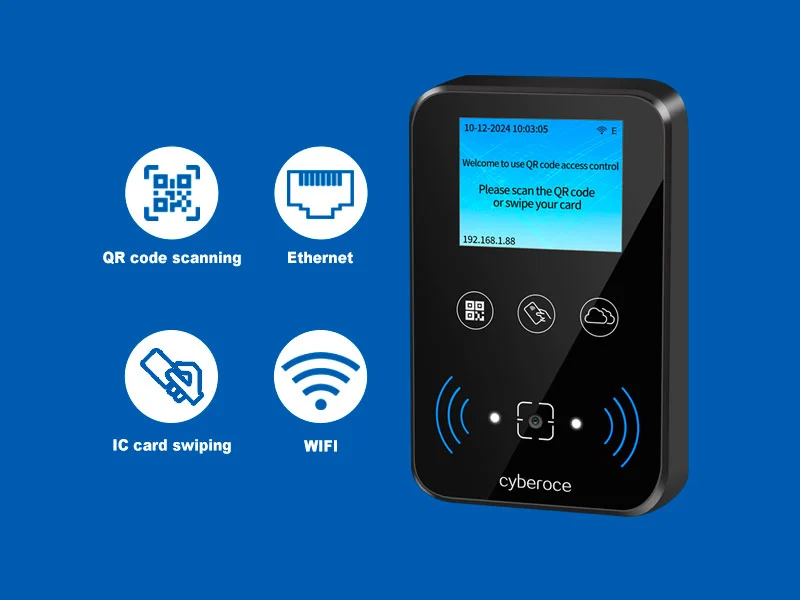
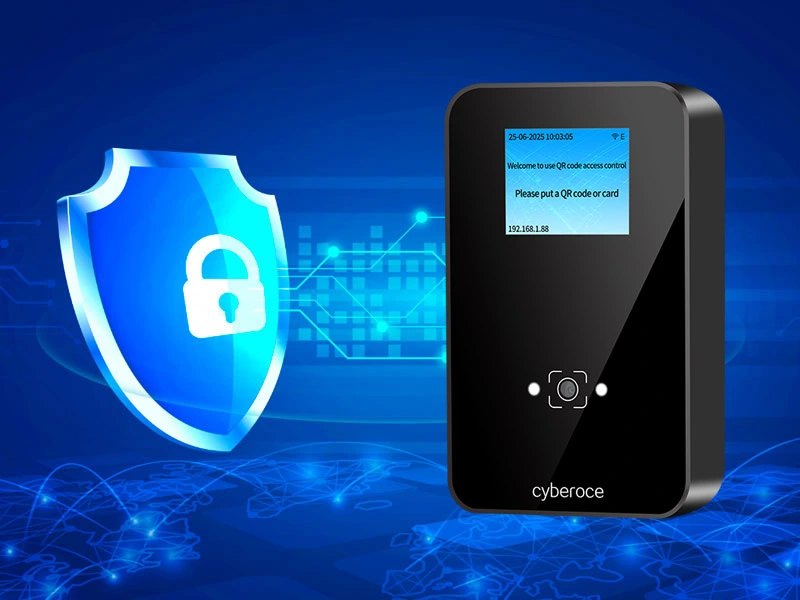
Multi-functional all-in-one QR code access control device, supporting door access via QR code scanning, card swiping, etc.

The device private key is a core feature tailored for developers in the Cerberus QR Code Access system. It is based on strong secure signature verification, providing solid support for system integrators and software platform providers with development capabilities to build integrated solutions: higher system controllability, stronger project sustainability, and better competitive positioning. Embracing this feature, you will take the lead in the global market and deliver truly intelligent and secure QR code access control experiences to customers.
Original Source from https://cerberus-qrcodeaccess.com/info-detail/tailored-for-overseas-integration-how-can-device-private-keys-make-your-qr-code-access-control-solution-stand-out

Tuesday, February 3, 2026

Why Quality Control is the Backbone of Stable QR Code Access Control Systems

  In today’s security landscape, QR code access control has moved from a "trendy feature" to a standard requirement for office buildings, industrial parks, and smart communities. However, as adoption grows, the industry is shifting its focus from mere functionality to long-term stability, low failure rates, and minimal maintenance.

As a veteran manufacturer, Cerberus believes that while speed catches the eye, stability wins the trust. True reliability isn't just a line on a spec sheet—it is built through a rigorous, step-by-step manufacturing process.


I. Sourcing Without Compromise: The Lifecycle of Raw Materials

The reliability of any hardware begins with its "DNA"—the raw materials. At Cerberus, we adhere to a strict procurement philosophy: No cutting corners, no recycled components, and no compromises.

  • Supplier Screening: We prioritize partners with proven track records and stable batch consistency.

  • The "Freshness" Factor: Electronic components have a shelf life. We avoid "stale" inventory (materials stocked for too long) because aged components are the leading cause of instability in high-frequency scanning scenarios.

  • Consistency: Consistent material batches ensure that the 1,000th unit performs exactly like the 1st.


II. The SMT Process: Why Every PCBA Must Be Flawless

For a QR code reader to achieve millisecond recognition and constant network connectivity, the quality of the PCBA (Printed Circuit Board Assembly) must be exceptional.

After the SMT assembly and soldering phase, Cerberus implements AOI (Automated Optical Inspection). This high-precision technology scans every board for:

  • Cold solder joints

  • Component misalignment

  • Invisible micro-fractures

By catching these "eye-invisible" defects at the factory stage, we prevent hardware crashes that usually only surface after months of field use. While AOI increases production time, it drastically reduces the Total Cost of Ownership (TCO) for our clients.


III. The 72-Hour Aging Test: Stress-Testing for Reality

A device might look perfect when it is first powered on, but the real test is continuous operation. To ensure "out-of-the-box" reliability, every Cerberus device undergoes a 72-hour power-on aging test.

  1. Continuous Load Simulation: We run the systems under constant load to simulate high-traffic environments.

  2. Infant Mortality Protection: Most hardware failures occur within the first few hours of use. We ensure those failures happen in our lab, not at your entrance gate.

  3. 100% Final Inspection: After aging, every unit must pass a final round of communication, recognition, and interface tests before being packaged.


IV. Stability: The Ultimate Competitive Advantage

On-site, QR code access control is incredibly convenient. It eliminates physical card management and simplifies permission shifts. However, that convenience vanishes the moment a system fails.

At Cerberus, we focus on the things that aren't immediately noticeable but become vital over time:

  • Reliability over "Feature Bloat": We prioritize flawless recognition over unnecessary software gimmicks.

  • Quality over Cost-Cutting: We manage costs through efficiency, never by sacrificing the integrity of the hardware.

  • Prevention over Cure: We solve problems on the production line so you don't have to solve them at the project site.


Conclusion

At Cerberus, we prefer to spend time perfecting the product so our customers don't have to spend time fixing it. If you value long-term operational stability over short-term parameter comparisons, Cerberus is your ideal partner for QR code access control solutions.

Original source from https://cerberus-qrcodeaccess.com/info-detail/strict-quality-control-ensures-the-long-term-stable-operation-of-access-control-with-qr-codes-systems