Wednesday, March 11, 2026

CR10E QR Code Access Controller Terminal: A Professional Smart Solution for Turnstile Scenarios

 In today's rapidly evolving landscape of smart buildings, scenic area management, sports venues, exhibition halls, and other scenarios, efficient, stable, and convenient access control has become a core operational requirement. Traditional access control devices are limited by their single-functionality, complex wiring, and poor compatibility, making them difficult to adapt to high-integration usage scenarios like turnstiles.

CR10E QR Code Access Controller Terminal: A Professional Smart Solution for Turnstile Scenarios

In today's rapidly evolving landscape of smart buildings, scenic area management, sports venues, exhibition halls, and other scenarios, efficient, stable, and convenient access control has become a core operational requirement. Traditional access control devices are limited by their single-functionality, complex wiring, and poor compatibility, making them difficult to adapt to high-integration usage scenarios like turnstiles. The CR10E QR Code Access Controller( All-in-One Device) was specifically designed to address these pain points, offering an integrated solution with multi-mode recognition and exceptional adaptability, making it the preferred choice for turnstile-specific access control equipment.
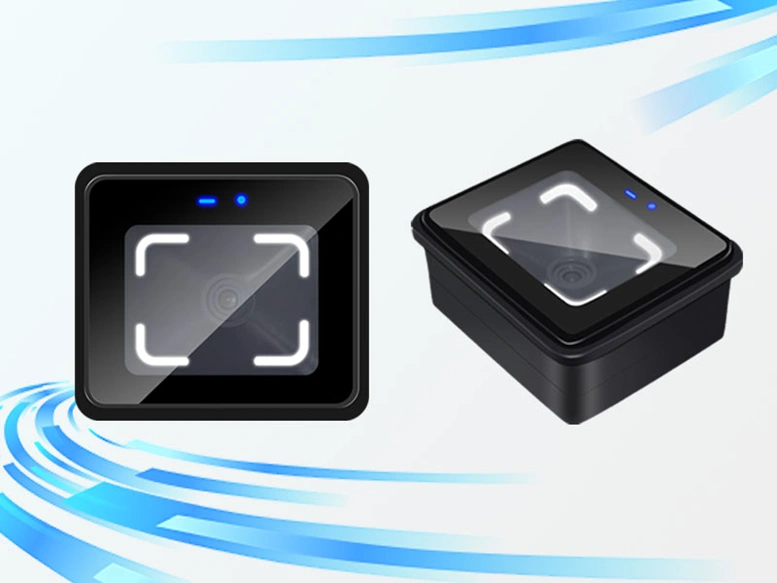
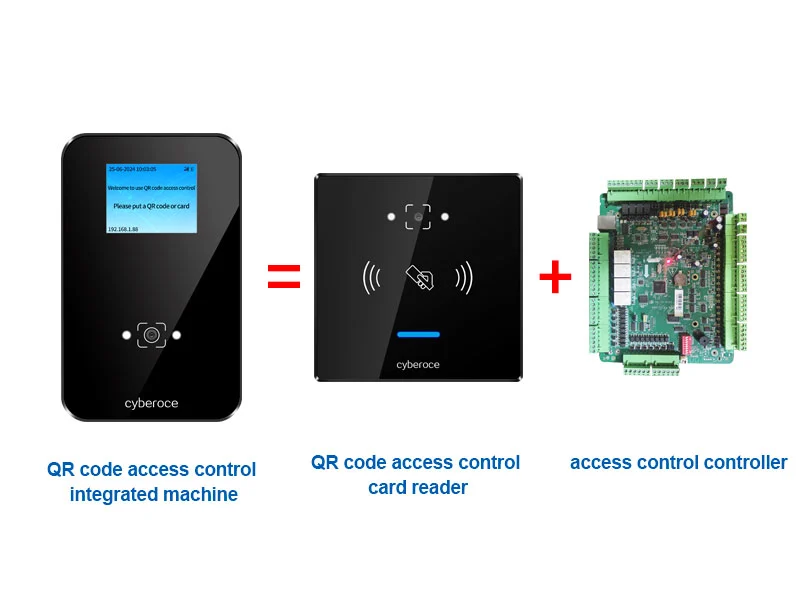
The CR10E is a dedicated QR code access controller integrated device designed for turnstiles, with its standout feature being high integration. It combines the functions of a card reader and controller into a single unit, achieving true integrated operation. Unlike traditional access control systems that require separate installation and wiring, the CR10E's all-in-one structure significantly simplifies installation steps, reduces equipment failure points, and enhances overall operational stability. Additionally, it saves installation space and construction costs, perfectly fitting the compact installation environment of turnstiles. Whether it's a cylinder turnstile, swing gate, or wing gate, the CR10E can be easily adapted.

As a professional QR code access control device, CR10E has strong system compatibility and can seamlessly integrate with any third-party management system without the need for additional adapter modules. It can quickly integrate into existing security systems, ticketing systems, and office management platforms. At the same time, the device can directly control the opening and closing of the gate switch and the electric control lock, with fast response speed and accurate recognition, effectively avoiding problems such as traffic jams, false opening and closing, providing reliable guarantee for efficient personnel passage, and
truly achieving "one device for traffic control".

In terms of identification methods, the CR10E QR code access controller supports diversified verification modes, fully covering the usage needs of different scenarios. The device not only supports mainstream QR code recognition, meeting the needs of mobile phone scanning and electronic credential access, but also compatible with traditional recognition methods such as RFID card swiping and barcode scanning, catering to various needs such as the elderly, temporary visitor access, and regular employee swiping. Whether it's electronic tickets for scenic spots, QR codes for booking exhibition halls, access cards for office staff, or barcode vouchers for sports venues, they can all be quickly identified and accurately verified, greatly improving traffic efficiency and user experience.
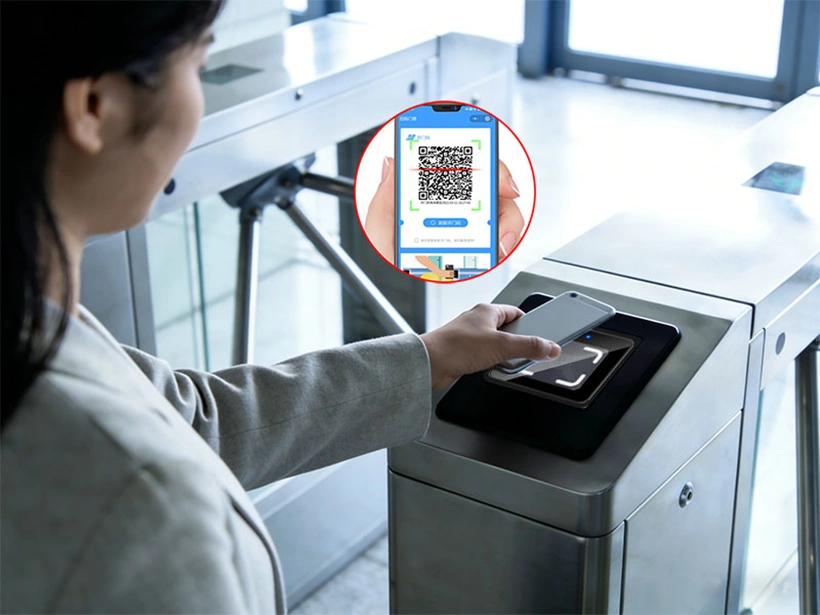
With professional design and powerful performance, the CR10E QR code access controller is widely applicable in various scenarios. In the office building scene, it can achieve seamless passage for employees and authorization for visitors to scan codes, improving the security level and management efficiency of the office park; In exhibition halls and sports venues, it is possible to quickly verify ticket QR codes and identity credentials, divert and guide large crowds, and avoid congestion and queuing; In semi open outdoor scenes such as scenic spots and parks, the equipment has strong stability and fast recognition speed, and can adapt to the needs of multiple people and high-frequency traffic, helping to achieve intelligent entrance and exit management.

Compared to ordinary access control devices, the CR10E QR code access controller focuses more on the actual needs of the gate scene. The integrated design eliminates tedious debugging, and multiple recognition methods balance convenience and universality. It is highly compatible and breaks down system barriers, simplifying the operation and maintenance process of direct control gates and electronic locks. In the current era of continuous popularization of smart access, this device not only enhances the intelligence level of entrance and exit management, but also becomes an ideal choice for various places' gate machines to match access control with high stability, adaptability, and cost-effectiveness, providing solid support for safe, efficient, and intelligent access management.

From product design to functional implementation, CR10E always revolves around the core of "professionalism, practicality, and efficiency", with QR code access control as the core function, integrating multi scenario adaptation capabilities, and truly tailoring for gate access. Whether it is commercial buildings, cultural and tourism attractions, large venues, or public venues, choosing the CR10E QR code access controller is to choose a more intelligent, stable, and worry free entrance and exit control solution, helping various scenarios achieve intelligent management upgrades.

original source from https://cerberus-qrcodeaccess.com/info-detail/cr10e-qr-code-access-controller-terminal-a-professional-smart-solution-for-turnstile-scenarios

Tuesday, March 10, 2026

"Anti-Tamper Alarm" for Access Control with QR Code Devices: Securing Hardware for Worry-Free Project Delivery

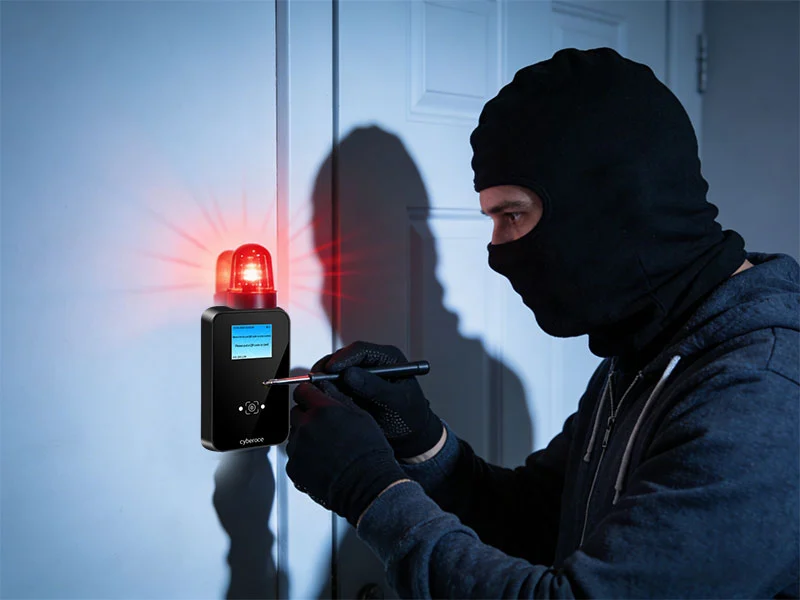
 In current projects, access control with QR code is highly prevalent. While scanning speed is a known factor, many engineering contractors are actually more concerned about another issue in real-world deployments: the risk of devices installed in outdoor or public areas being pried off or vandalized.

Table of contents:

I、What is Anti-Tamper Alarm Output?

II、What is the Practical Value of Anti-Tamper Alarms in Access Control with QR Code Projects?

III、A More Practical Solution When Paired with QR Code Systems

Text:
Through long-term collaboration with engineering contractors and system integrators, Cyberoce has found that no matter how robust the backend system is, once the physical device is dismantled, the frontline defense is breached. Addressing this issue, Cyberoce has integrated a highly practical feature into its access control with QR code terminals: the anti-tamper alarm output.

I、What is Anti-Tamper Alarm Output?

Simply it ensures that the device immediately sends out an alarm signal if it is pried open or dismantled.

During hardware circuit design, we reserved a dedicated tamper alarm interface. The device features an internal built-in sensor mechanism to detect whether the reader is properly mounted against the surface. If it is forcibly pried or detached from its bracket, the reader instantly outputs an alarm signal via this interface. This is a hardware-level trigger that does not rely on complex software logic—it outputs immediately upon activation. It can be wired directly to the backend management system or linked to an on-site siren.

The sole purpose is to notify personnel at the very first moment that the device is being vandalized.


II、What is the Practical Value of Anti-Tamper Alarms in Access Control with QR Code Projects?

  1. Completing the "Physical Security" Puzzle

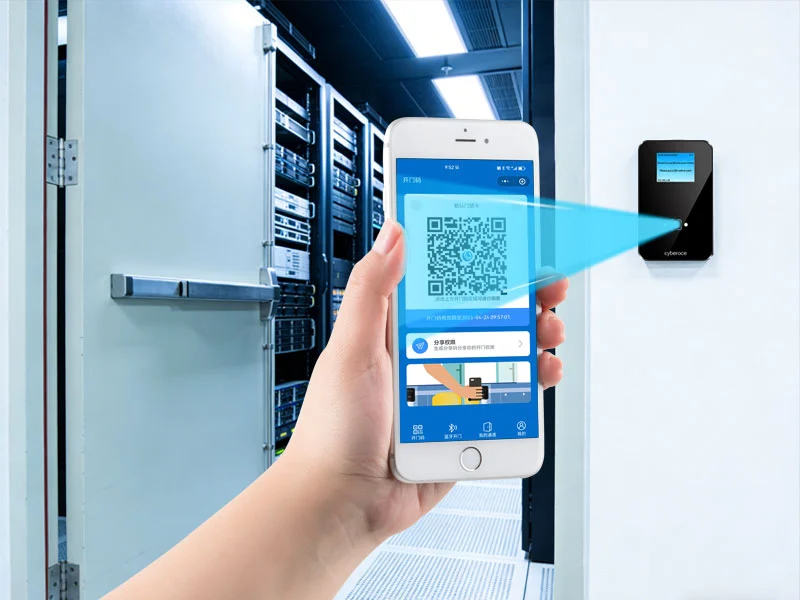
While QR codes solve the logical issue of "who can enter," the anti-tamper alarm solves the physical issue of "is the device still there." In scenarios such as server rooms, industrial parks, warehouses, and unattended sites, if intruders attempt to bypass the system by destroying the devices, the tamper alarm instantly exposes this behavior.

  1. Data Integrity and Easier Post-Maintenance

Operating at the hardware level, the anti-tamper function offers high stability. Even if an on-site operating error causes a factory reset, the core settings related to the tamper alarm will not be lost. This is particularly crucial for overseas or remote projects, significantly reducing remote after-sales costs caused by lost settings or false alarms.

  1. Enhancing Bidding and Solution Competitiveness

In many projects, readers equipped with tamper alarms are directly classified as "engineering-grade" equipment. Compared to standard barcode readers, this added layer of physical protection makes clients more likely to recognize the completeness of the solution, reflecting the contractor's professional consideration for security details.

 QR Code Access Control Applied in a Server Room

III、A More Practical Solution When Paired with QR Code Systems

While supporting anti-tamper output, Cyberoce's access control with QR code devices also maintain robust software flexibility:

  • Dynamic QR Codes: Supports dynamic code verification to prevent risks associated with screenshots and unauthorized sharing.
  • Easy System Integration: Provides SDKs and APIs, allowing platforms to directly read the tamper alarm status for linkage processing.
  • Customization Support: Offers OEM/ODM customization, including reinforced enclosures, modified anti-tamper structures, and logo silk screening, customization the PCB etc.

In actual deployments, the QR code authorizes access, while the tamper alarm secures the physical device itself. This combination ensures peace of mind on-site.

Cyberoce Technology has long focused on the R&D of QR code access control hardware. Our product positioning is clear: easy to integrate, highly durable, and suitable for long-term engineering use.

If you are looking for QR code access control terminals with anti-tamper alarm outputs and support for secondary development, or if you have specific hardware customization needs, please feel free to contact us for access security detailed technical specifications and integration methods.


Original source from https://cerberus-qrcodeaccess.com/info-detail/anti-tamper-alarm-for-access-control-with-qr-code-devices-securing-hardware-for-worry-free-project-delivery

Sunday, March 1, 2026

QR Code Access Control All-in-One vs. split access control: Full Comparison & Selection Guide


QR Code Access Control All-in-One vs. split access control: Full Comparison & Selection Guide

Are you still troubled by the tedious wiring between the controller and the read head? This article deeply compares the advantages and disadvantages of QR code access control all-in-one machines and traditional split type access control machines, revealing how modern QR code access control all-in-one machines can significantly reduce construction time and simplify post maintenance without sacrificing security. Make more efficient and wise choices for your next project.

Table of contents:

I、 Preface

II、 Noun Explanation

1.split-type access control
2.QR code access control all-in-one machine

III、 Comparison of advantages and disadvantages

1.Split type access control: high security

2.QR Code Access Control: Pros and Cons Analysis

IV. Is the QR code access control integrated machine safe

V、Cost

VI、 How to choose access control 


Text:

I、 Preface

Many people do not know how to choose between QR code access control integrated machine and split type access control when choosing access control, and are not clear about the difference between these two methods.

II、 Noun Explanation

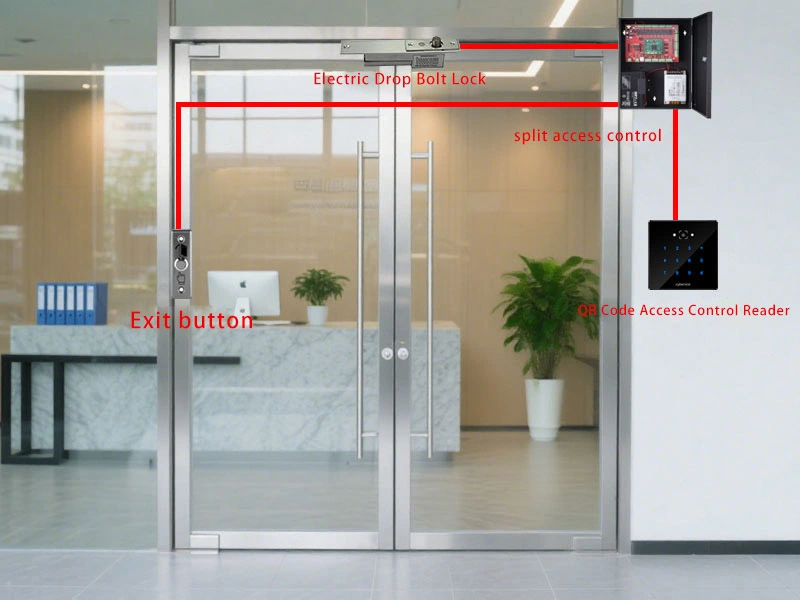
1.split-type access control
split  Access Control Topology Diagram

Composition: access control controller+reader.
Working mode: The reader is responsible for reading card or biometric data and transmitting the data to the controller through methods such as Wiegand, RS485, RS232, etc. The controller performs logic such as permission judgment, door opening, and communication with the backend.

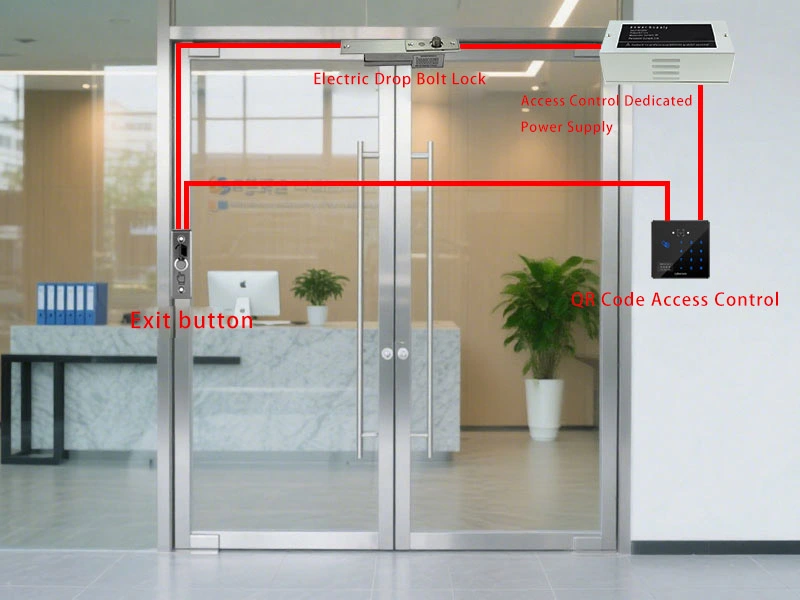
2.QR code access control all-in-one machine

QR Code All-in-One Access Control Topology Diagram


Composition: The controller and QR code reader are integrated into one device.
Working mode: All functions such as data reading, permission judgment, door opening, and communication with the backend are independently completed on this device.
As a professional manufacturer that produces both QR code access control all-in-one machines, controllers, and QR code access control readers, this article will objectively analyze the advantages and disadvantages of both.

III、 Comparison of advantages and disadvantages

1.Split type access control: high security

Advantage:
①High security: The controller is usually installed in indoor safe areas (such as ceilings or computer rooms), while the reading head is installed outside the door. Even if criminals damage or dismantle the door reading head, it is impossible to illegally open the door through short circuits or other means, so the safety is relatively high.
② Less network IP required: When using multi door controllers (such as dual door or four door), only one set of power supply and one network cable need to be set up for the controller, reducing the overall wiring quantity.
③Simple AB door interlock logic: Implementing complex AB door interlock functions on multiple door controllers is more direct, with configuration completed within the controller without relying on backend servers or communication between multiple controllers.
Potential drawbacks:
① Increased construction workload: The connection between the controller and the reading head (usually at least four wires: two power supplies and two communication cables) increases the workload of construction and installation.
② Connection stability challenge: With one more connection, there is one more potential point of failure. The more connections between the controller and the card reader, the higher the requirements for daily maintenance and stability.
③ Single point of failure has a large impact range: If multiple controllers are used, once the controller fails, the operation of multiple access controls will be affected simultaneously.

2.QR Code Access Control: Pros and Cons Analysis

 The QR code access control all-in-one machine integrates the QR code reader and controller into one device, and all functions (data reading, permission judgment, door opening, communication, etc.) are independently completed on one device.
Advantage:
① Simple installation and deployment: As there is no connection between the controller and the read head, at least four wires can be omitted during construction, which improves construction efficiency and shortens the project cycle.
② Intuitive status display: Many QR code access control all-in-one machines come with built-in display screens, which, due to their integration, can conveniently display device status, time, card number, network status, and other information in real time, providing a more user-friendly experience.
③ High independence: One device controls one door, with stronger independence. The access control systems will not interfere with each other and have good system isolation.
Potential drawbacks:
Increased demand for network resources: Each QR code access control all-in-one machine needs to independently connect to the network and occupy an IP address, requiring more network IP addresses than a split system with multiple controllers.

IV. Is the QR code access control integrated machine safe

Many users are concerned about the security of the QR code access control all-in-one machine - can criminals forcefully dismantle the machine and then short-circuit the circuit to illegally open the door?
This concern has been effectively addressed with modern access control technology:
① Environmental deterrence: In today's densely monitored office and public places, violent dismantling of QR code access control all-in-one machines will be monitored and recorded, which greatly serves as a deterrent. In addition, most QR code access control all-in-one machines are mostly used indoors and are often manned.
② Security upgrade plan: For scenarios with high security requirements, Cerberus has launched the AC037 security module.
*This module is connected to the QR code access control all-in-one machine through RS485 private protocol.
*The safety module is placed indoors (such as on the ceiling) and is responsible for door opening control.
*Even if criminals dismantle the QR code access control machine outside the door, they cannot open the door lock through short circuiting, which improves the security of the QR code access control machine.

V、Cost

In terms of overall cost, the difference between integrated QR code access control and traditional split access control is not significant. However, the combination of a four door controller and a reading head may have a slight cost advantage in some cases.

VI、 How to choose access control 

Conclusion: Choose the most suitable solution for you

Features

Split type access control (controller+reader)

QR code access controller(integurated)

Safety

Extremely high (controller indoors)

Good/can be upgraded to extremely high through the security module

Construction difficulty

Higher (controller reader requires connection)

Simple (minimal wiring)

single point of failure

Affects multiple doors (multi door controllers)

Only affects a single door (high independence)

Internet demand

Less (one controller with multiple doors)

Multiple (one door, one IP)

recommended scenarios

High security requirements and multi door interlocking environment.

Strong independence, pursuit of rapid deployment, indoor environment.

Original source from https://cerberus-qrcodeaccess.com/info-detail/qr-code-access-control-all-in-one-vs-split-access-control-full-comparison-selection-guide