The Cerberus QR Code Access Control Solution is designed for scenarios such as hotels, rental apartments, and study rooms. It addresses the pain points of traditional access control methods, such as lost access cards, password leaks, and poor biometric recognition experiences. Powered by a WeChat Mini Program, the QR code access system enables secure and traceable cloud-based authorization with anti-sharing protection, ensuring both safety and convenience.
Table of contents:
I. Pain Points of Traditional Access Control in Scenarios like Hotels, Rental Apartments, and Self-Study Rooms
II. Core Advantages of the QR Code Access Control Solution
III. Flowchart for Hotel Guests, Rental Tenants, and Self-Study Students Using QR Code Access Control to Scan and Open the Door
IV. Two Solutions for Configuring the QR Code Access Control Anti-Sharing Function
V. Customizing the Mini Program Display Name and Uploading a 640*300 Pixel Image to Replace the Company LOGO Header for Brand Enhancement Specific Operation
VI. QR code access control Door Status Monitoring:
VII. User Access Control with QR Code for Door Opening, Turnstile Passage, or taking Elevator
VIII. Access Records Query
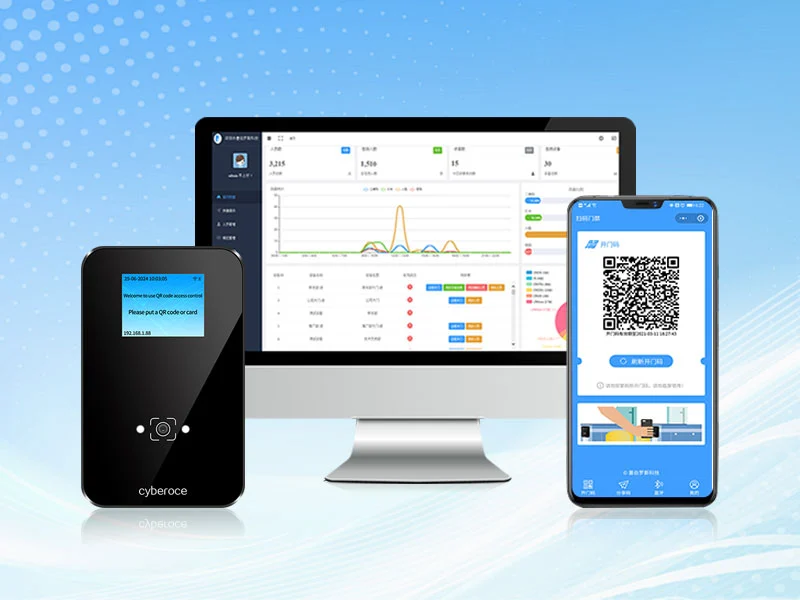
I. Pain Points of Traditional Access Control in Scenarios like Hotels, Rental Apartments, and Self-Study Rooms:
With the popularization of QR code technology and the changing lifestyle habits of the younger generation, traditional access control management methods have exposed numerous pain points in short-term rental and temporary access scenarios such as hotels, rental apartments, and self-study rooms.1.Difficulty in Access Card Management: Cards are easily lost, difficult to retrieve, and can be duplicated. Permissions cannot be cleared promptly after check-out/lease termination, posing significant security risks.
2.Uncontrollable Password Access: Passwords are prone to leakage and cannot be traced. Frequent modification also causes inconvenience to users.
3.Inapplicability of Biometric Recognition: Facial/fingerprint recognition involves privacy concerns. For temporary and highly mobile groups like hotel guests/students, the enrollment process is cumbersome, leading to a poor user experience.
4.Risks with Generic QR Codes: Most QR codes generated by third-party mini-programs can be freely shared or screenshotted, leading to a mismatch between the "payer" and the "actual user," causing management confusion and business disputes. (See the screenshot of our QR code access control mini-program interface with the sharing function not disabled below).
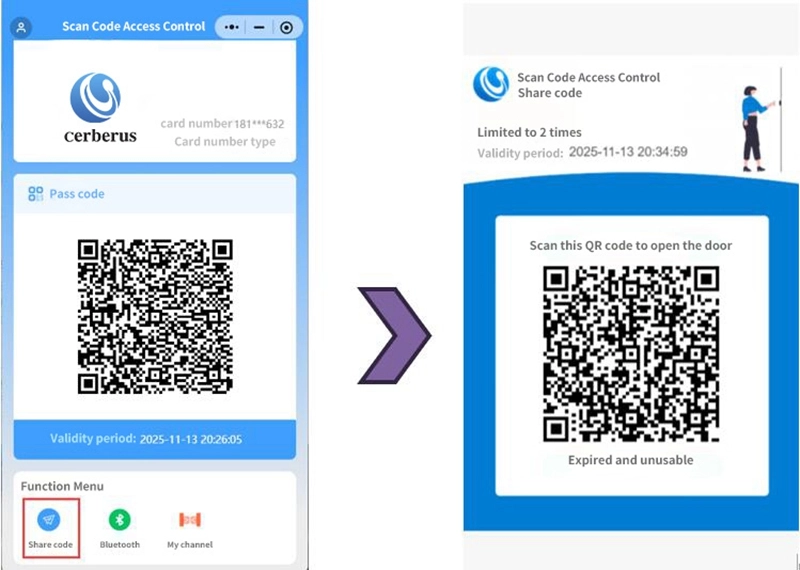
Shenzhen Cerberus Technology Co., Ltd., based on its deep accumulation in QR code access control technology, has launched an exclusive QR code access control solution featuring "Anti-Sharing, Traceable, and Over-the-Air Authorization" specifically for the unique needs of these scenarios, relying on the WeChat Mini Program. This solution aims to strictly bind access rights to the user's identity through technical means, without the need for an additional app, ensuring simple operation and flexible authorization, and preventing unauthorized lending. Simultaneously, it provides managers with an efficient and convenient remote management tool, significantly enhancing management efficiency and security.
II. Core Advantages of the QR Code Access Control Solution
2.1. Zero-Development Deployment: Our solution requires no additional technical investment or programming skills from integrators. They can focus on installation and commissioning, with a ready-to-use system upon account activation. This enables faster quoting and quicker project deployment.
2.2. Anti-Sharing Control: Proprietary QR code mechanism with one-click deactivation of sharing and remote unlock functions, ensuring authorized, individual use and preventing multi-person use from a single credential
2.3.Private Branding: Supports customizing the Mini Program name and uploading the Company LOGO (640*300 pixels) to enhance the integrator's brand image.
2.4.Over-the-Air Authorization: Authorization is performed in the backend using the mobile phone number. Guests enter via Access Control with QR Code immediately without register at the management office.
2.5. Multiple Security Mechanisms: The QR code refreshes every 5 seconds, has a 5-minute validity period, and employs anti-screenshot + blacklisting strategies to ensure secure usage.
2.6. SAAS Cloud Management: No deployment is required. Managements can remotely authorize tenants/members through the SaaS cloud platform without issuing physical cards or enrolling fingerprints/faces on-site, greatly reducing the management burden. This is particularly suitable for scattered apartments and chain scenarios.
2.7. Full Platform Compatibility: Supports Windows/Linux/Android systems, allowing management via computer or mobile phone, enabling operation anytime, anywhere.
2.8. Privacy Protection: The QR Code solution completely avoids the privacy leakage risks associated with collecting biometric information like facial data, complying with personal information security.
2.9. Door Lock Status Monitoring: When installed with an Electric Strike Lock or Electromagnetic Lock that provides feedback signals, the real-time open or closed status of the door can be displayed.
3.0. Downward Compatibility: System upgrades do not affect existing configurations, ensuring long-term stable operation.
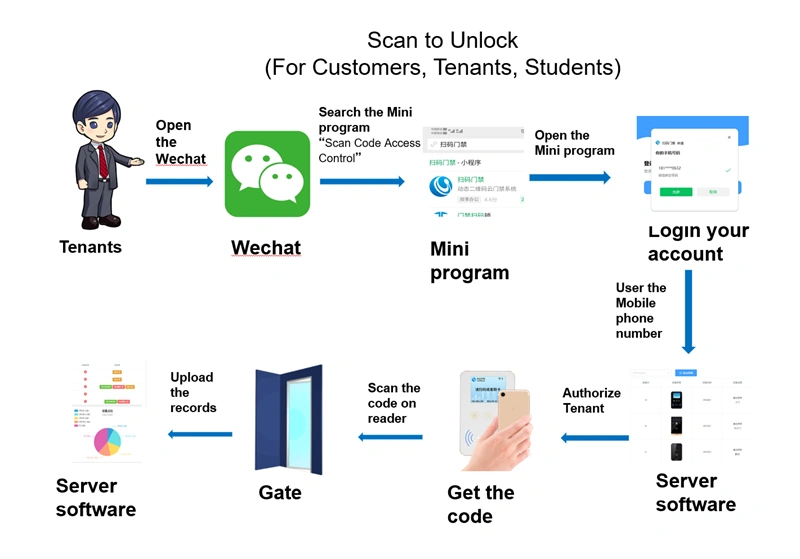
III. Flowchart for Hotel Guests, Rental Tenants, and Self-Study Students Using QR Code Access Control to Scan and Open the Door
3.2. Recommended Hardware Selection for QR Code Access Control Terminal:
Installed on access gate or turnstiles, scanning QR codes, and also supporting IC card/password/ID card/CPU card access. Supports offline and online verification.
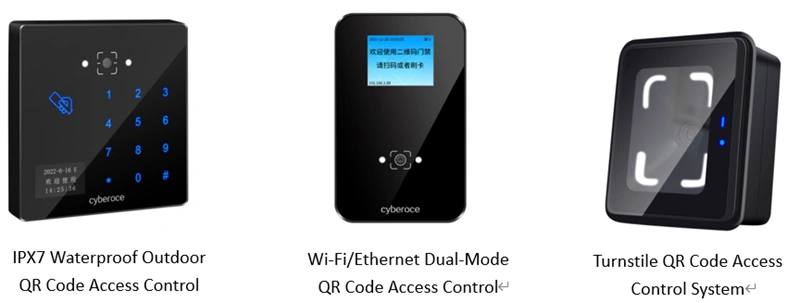
(Image Placeholder: Three types of QR Code Access Control Terminals: IPX7 Waterproof Outdoor Dedicated, WIFI/Ethernet dual-Mode, Turnstile Dedicated)
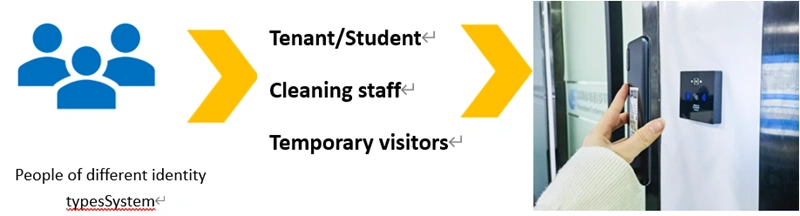
IV. Two Solutions for Configuring the QR Code Access Control Anti-Sharing Function
4.1. Solution One: Individual User Restriction
Applicable when the administrator/dorm manager retains the QR code sharing permission (for temporary visiting by prospective tenants), but ordinary users are disabled.
4.1.1. Disable Sharing Code and Remote Door Opening for Individual Users
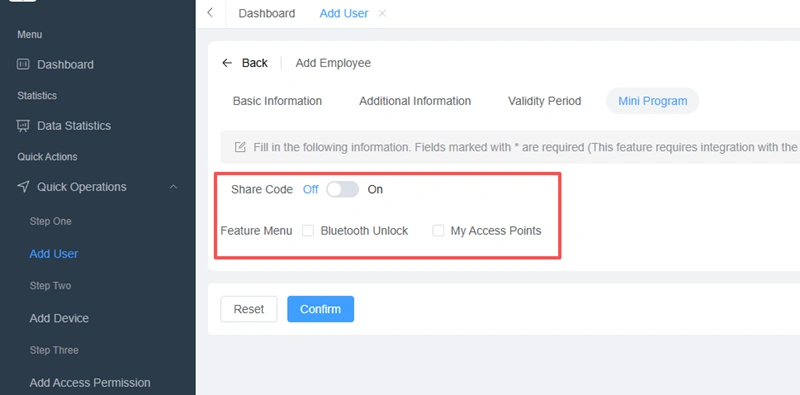
Turn off all functions: Share QR Code, Bluetooth Door Opening, and My Channel (Remote Door Opening). The "Share Code" button turns gray, and the checkmarks "√" before "Bluetooth Door Opening" and "My Channel" are removed.
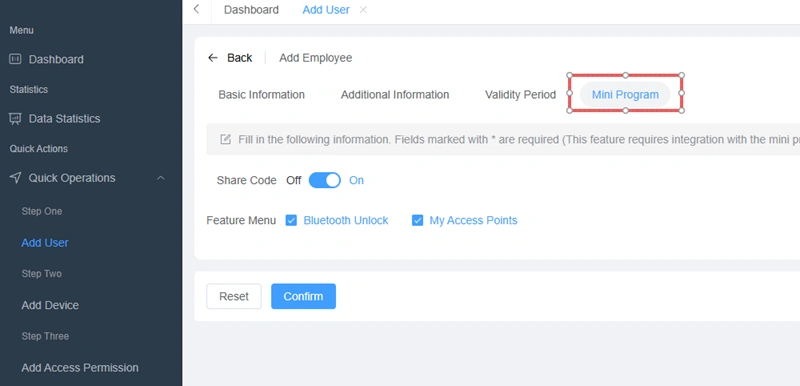
4.1.2. Interface After Disabling:
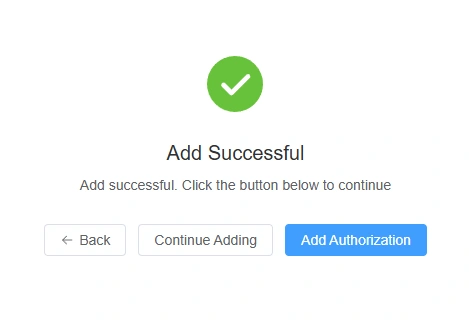
4.1.3. Confirm Modification: Click "Confirm" to complete the modification.
4.1.4. User Mini Program Interface: At this point, when the user opens the "Scan Code Access Control" mini-program on their phone, the shareable interface is gone.
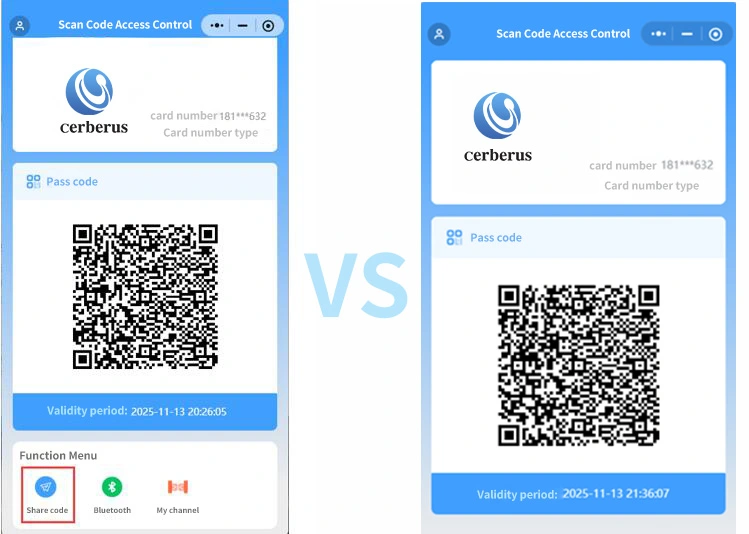
(Image Placeholder: Comparison of interfaces: Share Code Interface (Original)VS No Share Code Interface (After Setting) )
4.1.5. Select Validity Period (Key Setting Item):
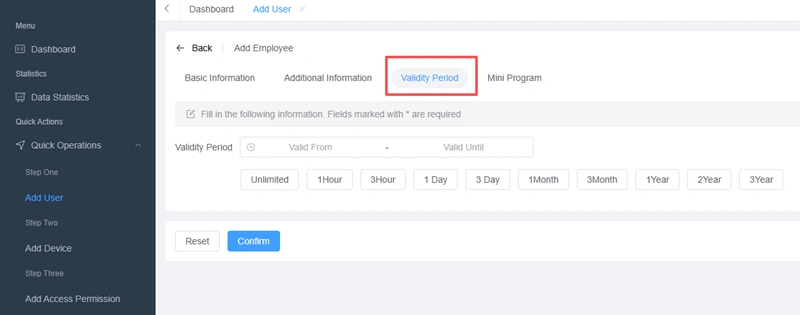
Since scenarios like hotels, rental apartments, and self-study rooms involve short-term temporary authorization, select the appropriate authorized door opening duration for the QR code access control based on the actual needs of each scenario, and click "Confirm" to save the setting.
4.2. Solution Two: Unified Restriction for All Accounts (Applicable when sharing must be disabled for all users)
4.2.1. System-Wide Setting: Click System Settings -> Mini Program Settings.
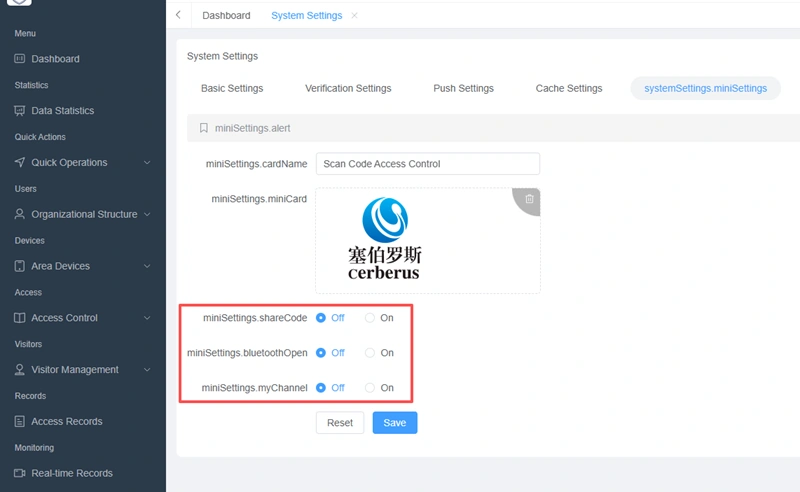
Turn off all functions: Share QR Code, Bluetooth Door Opening, and My Channel (Remote Door Opening). When disabled here, the Mini Program for all personnel will lack the functions for sharing QR codes, Bluetooth, and remote door opening. This fulfills the requirements for rental, hotel, and self-study room applications.
V. Customizing the Mini Program Display Name and Uploading a 640*300 Pixel Image to Replace the Company LOGO Header for Brand Enhancement Specific Operation
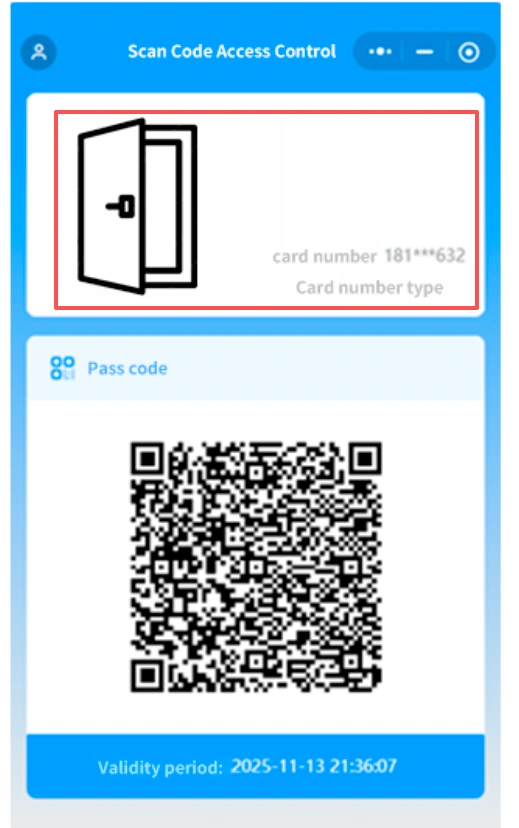
(The interface displayed by the QR code access control mini-program when the logo has not been changed)
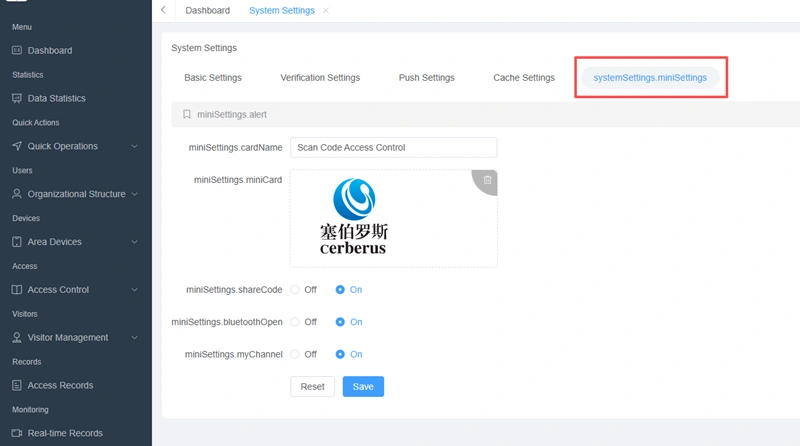
Upload a 640*300-pixel image in the Identity Card section. This can be a preferred image or the company LOGO.
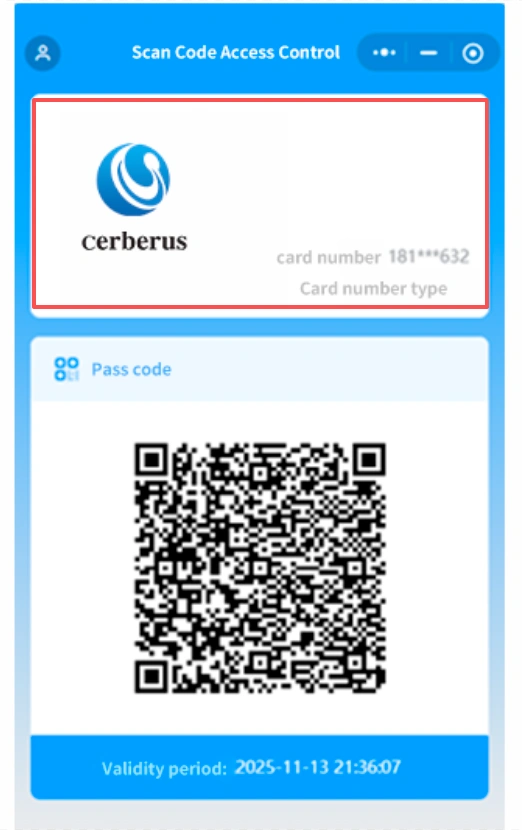
(After changing the logo, the interface displayed by the QR code access control mini-program)
VI. QR code access control Door Status Monitoring:
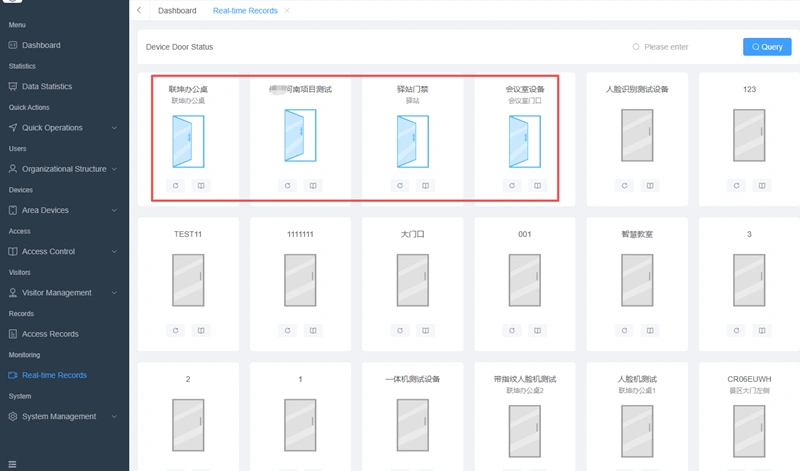
Under the Monitoring menu, in Real-time Records, if a 5-wire or 6-wire electric drop bolt or magnetic lock with a feedback signal is used, the open or closed status of the door can be monitored.
VII. User Access Control with QR Code for Door Opening, Turnstile Passage, or taking Elevator
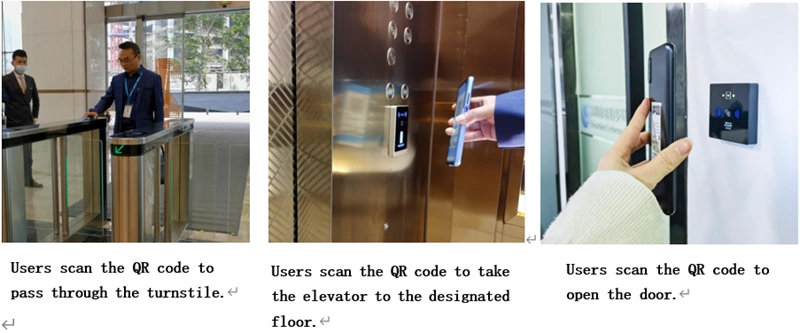
VIII. Access Records Query
Under the Access Records menu, access records can be queried by date, user group, area group, device name, device location, user name, etc.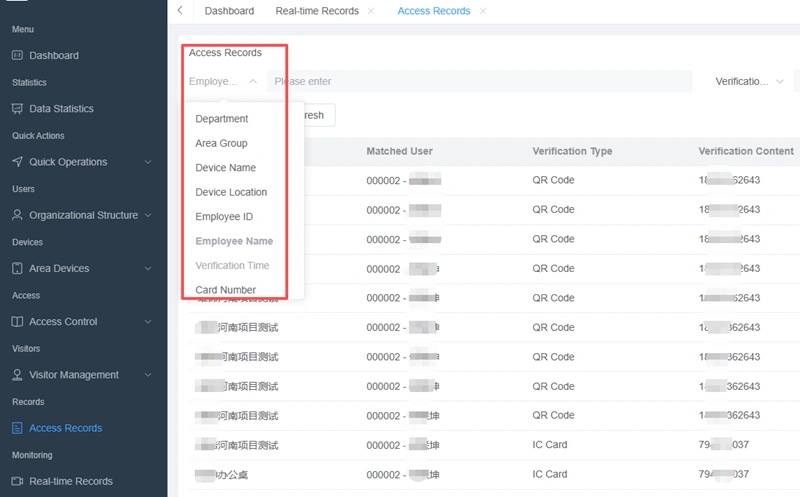
It can also distinguish whether the user entered using an IC card The Cerberus QR Code Access Control Solution is designed for scenarios such as hotels, rental apartments, and study rooms. It addresses the pain points of traditional access control methods, such as lost access cards, password leaks, and poor biometric recognition experiences. Powered by a WeChat Mini Program, the QR code access system enables secure and traceable cloud-based authorization with anti-sharing protection, ensuring both safety and convenience.
Table of contents:
I. Pain Points of Traditional Access Control in Scenarios like Hotels, Rental Apartments, and Self-Study Rooms:
With the popularization of QR code technology and the changing lifestyle habits of the younger generation, traditional access control management methods have exposed numerous pain points in short-term rental and temporary access scenarios such as hotels, rental apartments, and self-study rooms.
1.Difficulty in Access Card Management: Cards are easily lost, difficult to retrieve, and can be duplicated. Permissions cannot be cleared promptly after check-out/lease termination, posing significant security risks.
2.Uncontrollable Password Access: Passwords are prone to leakage and cannot be traced. Frequent modification also causes inconvenience to users.
3.Inapplicability of Biometric Recognition: Facial/fingerprint recognition involves privacy concerns. For temporary and highly mobile groups like hotel guests/students, the enrollment process is cumbersome, leading to a poor user experience.
4.Risks with Generic QR Codes: Most QR codes generated by third-party mini-programs can be freely shared or screenshotted, leading to a mismatch between the "payer" and the "actual user," causing management confusion and business disputes. (See the screenshot of our QR code access control mini-program interface with the sharing function not disabled below).
Shenzhen Cerberus Technology Co., Ltd., based on its deep accumulation in QR code access control technology, has launched an exclusive QR code access control solution featuring "Anti-Sharing, Traceable, and Over-the-Air Authorization" specifically for the unique needs of these scenarios, relying on the WeChat Mini Program. This solution aims to strictly bind access rights to the user's identity through technical means, without the need for an additional app, ensuring simple operation and flexible authorization, and preventing unauthorized lending. Simultaneously, it provides managers with an efficient and convenient remote management tool, significantly enhancing management efficiency and security.
2.1. Zero-Development Deployment: Our solution requires no additional technical investment or programming skills from integrators. They can focus on installation and commissioning, with a ready-to-use system upon account activation. This enables faster quoting and quicker project deployment.
2.2. Anti-Sharing Control: Proprietary QR code mechanism with one-click deactivation of sharing and remote unlock functions, ensuring authorized, individual use and preventing multi-person use from a single credential
2.3.Private Branding: Supports customizing the Mini Program name and uploading the Company LOGO (640*300 pixels) to enhance the integrator's brand image.
2.4.Over-the-Air Authorization: Authorization is performed in the backend using the mobile phone number. Guests enter via Access Control with QR Code immediately without register at the management office.
2.5. Multiple Security Mechanisms: The QR code refreshes every 5 seconds, has a 5-minute validity period, and employs anti-screenshot + blacklisting strategies to ensure secure usage.
2.6. SAAS Cloud Management: No deployment is required. Managements can remotely authorize tenants/members through the SaaS cloud platform without issuing physical cards or enrolling fingerprints/faces on-site, greatly reducing the management burden. This is particularly suitable for scattered apartments and chain scenarios.
2.7. Full Platform Compatibility: Supports Windows/Linux/Android systems, allowing management via computer or mobile phone, enabling operation anytime, anywhere.
2.8. Privacy Protection: The QR Code solution completely avoids the privacy leakage risks associated with collecting biometric information like facial data, complying with personal information security.
2.9. Door Lock Status Monitoring: When installed with an Electric Strike Lock or Electromagnetic Lock that provides feedback signals, the real-time open or closed status of the door can be displayed.
3.0. Downward Compatibility: System upgrades do not affect existing configurations, ensuring long-term stable operation.
III. Flowchart for Hotel Guests, Rental Tenants, and Self-Study Students Using QR Code Access Control to Scan and Open the Door
3.2. Recommended Hardware Selection for QR Code Access Control Terminal:
Installed on access gate or turnstiles, scanning QR codes, and also supporting IC card/password/ID card/CPU card access. Supports offline and online verification.
(Image Placeholder: Three types of QR Code Access Control Terminals: IPX7 Waterproof Outdoor Dedicated, WIFI/Ethernet dual-Mode, Turnstile Dedicated)
IV. Two Solutions for Configuring the QR Code Access Control Anti-Sharing Function
4.1. Solution One: Individual User Restriction
Applicable when the administrator/dorm manager retains the QR code sharing permission (for temporary visiting by prospective tenants), but ordinary users are disabled.
4.1.1. Disable Sharing Code and Remote Door Opening for Individual Users
Turn off all functions: Share QR Code, Bluetooth Door Opening, and My Channel (Remote Door Opening). The "Share Code" button turns gray, and the checkmarks "√" before "Bluetooth Door Opening" and "My Channel" are removed.
4.1.2. Interface After Disabling:
4.1.3. Confirm Modification: Click "Confirm" to complete the modification.
4.1.4. User Mini Program Interface: At this point, when the user opens the "Scan Code Access Control" mini-program on their phone, the shareable interface is gone.
(Image Placeholder: Comparison of interfaces: Share Code Interface (Original)VS No Share Code Interface (After Setting) )
4.1.5. Select Validity Period (Key Setting Item):
Since scenarios like hotels, rental apartments, and self-study rooms involve short-term temporary authorization, select the appropriate authorized door opening duration for the QR code access control based on the actual needs of each scenario, and click "Confirm" to save the setting.
4.2. Solution Two: Unified Restriction for All Accounts (Applicable when sharing must be disabled for all users)
4.2.1. System-Wide Setting: Click System Settings -> Mini Program Settings.
Turn off all functions: Share QR Code, Bluetooth Door Opening, and My Channel (Remote Door Opening). When disabled here, the Mini Program for all personnel will lack the functions for sharing QR codes, Bluetooth, and remote door opening. This fulfills the requirements for rental, hotel, and self-study room applications.
V. Customizing the Mini Program Display Name and Uploading a 640*300 Pixel Image to Replace the Company LOGO Header for Brand Enhancement Specific Operation
(The interface displayed by the QR code access control mini-program when the logo has not been changed)Method: Click System Settings -> Mini Program Settings -> Change the Home Page Title from our Mini Program name "Scan Code Access Control" to the desired display name.
Upload a 640*300-pixel image in the Identity Card section. This can be a preferred image or the company LOGO.
(After changing the logo, the interface displayed by the QR code access control mini-program)
VI. QR code access control Door Status Monitoring:
Under the Monitoring menu, in Real-time Records, if a 5-wire or 6-wire electric drop bolt or magnetic lock with a feedback signal is used, the open or closed status of the door can be monitored.
VII. User Access Control with QR Code for Door Opening, Turnstile Passage, or taking Elevator
VIII. Access Records Query
Under the Access Records menu, access records can be queried by date, user group, area group, device name, device location, user name, etc.
It can also distinguish whether the user entered using an IC card or a QR code.
If you require the complete solution and a specific, executable operation manual for QR code access control systems in short-term rental and temporary access scenarios such as hotels, rental apartments, and self-study rooms, please search for "cyberoce" and contact our official customer service.

No comments:
Post a Comment